No results found
A professional chemical peel can help improve the appearance of dullness, congestion, uneven texture, discoloration, and tired-looking skin by gently exfoliating surface buildup and revealing a smoother, brighter-looking complexion.
At SI Glam Glow, every chemical peel is selected according to your skin’s current condition, sensitivity level, concerns, and treatment goals. Your licensed esthetician evaluates your skin before recommending an appropriate peel and personalized aftercare plan.
Located in Staten Island, SI Glam Glow welcomes chemical peel clients from across Staten Island, Brooklyn, New York City, and nearby New Jersey.
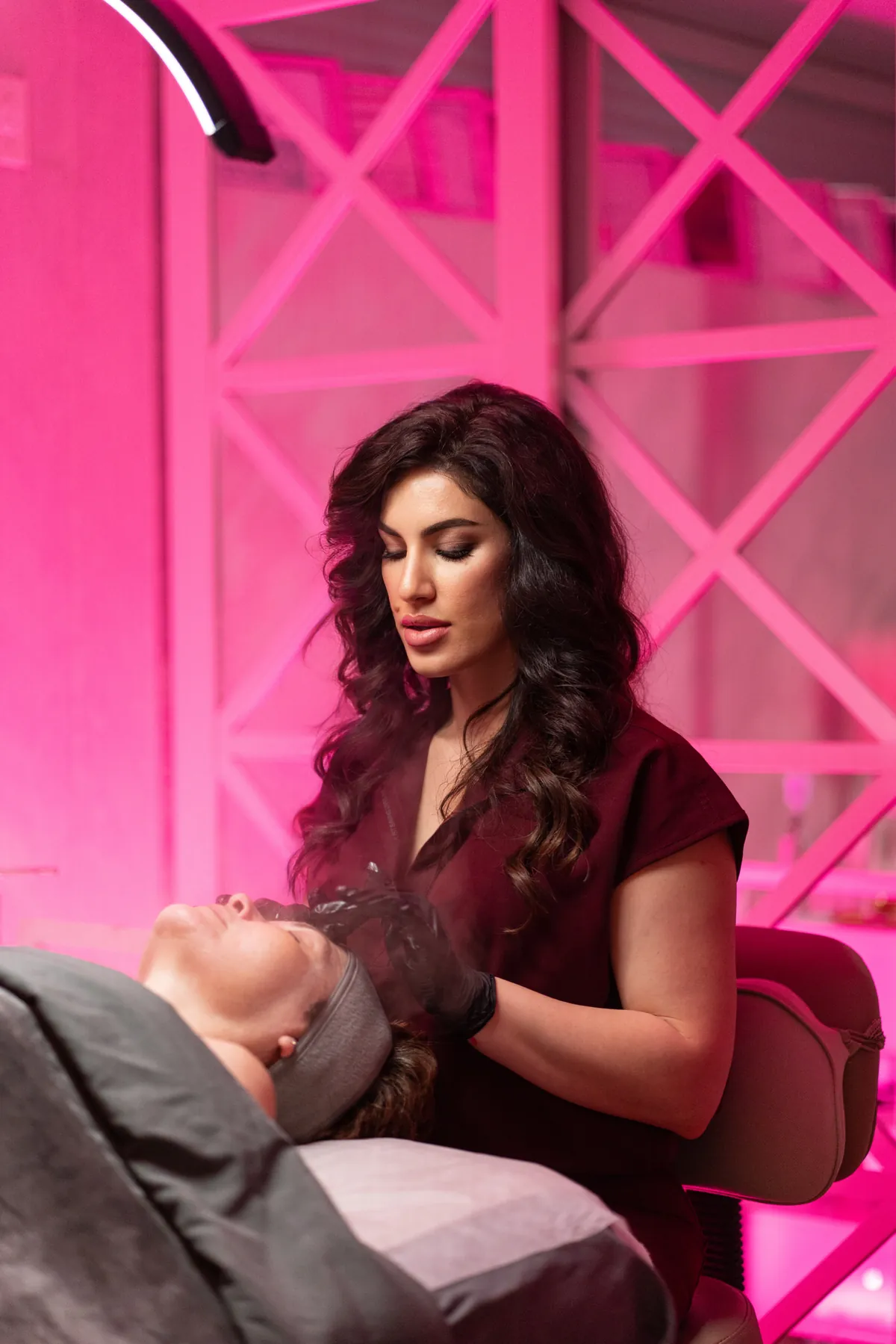
Chemical peels are professional exfoliating treatments that use carefully selected solutions to loosen and remove accumulated surface skin cells. Depending on the formula chosen, a customized chemical peel may help improve the appearance of dullness, uneven texture, congested pores, post-breakout marks, excess oil, and early signs of sun-related damage.
The goal is not simply to make the skin peel. The right treatment should support your individual skin goals while respecting your skin barrier, sensitivity level, and current skincare routine. At SI Glam Glow, every chemical peel is selected after evaluating your skin rather than applying the same formula to every client.
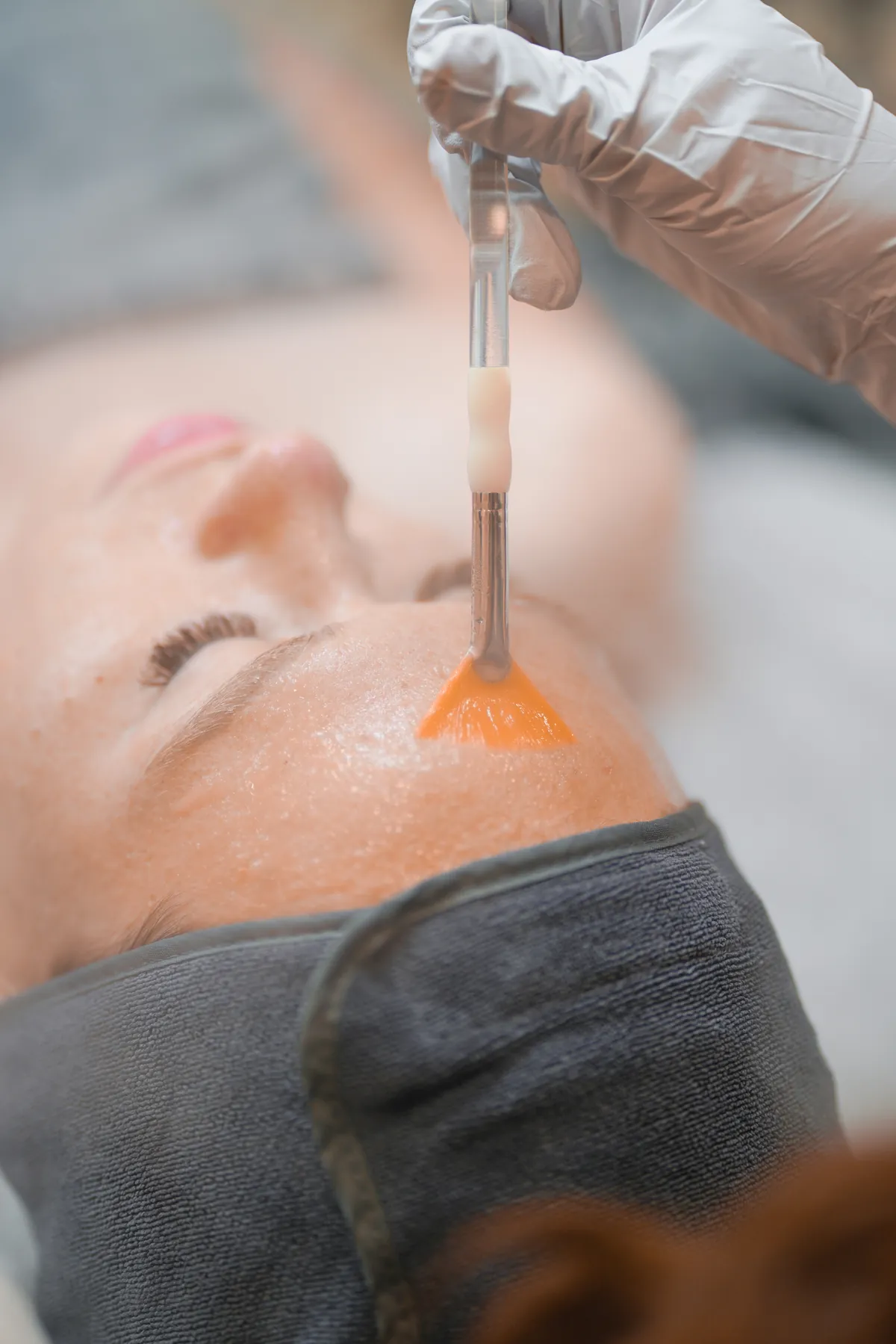
A customized chemical peel may be appropriate when your complexion looks dull, rough, congested, or uneven despite following a consistent skincare routine. Because every skin concern requires a different approach, your licensed esthetician will assess your skin and determine the most appropriate peel strength—or recommend another facial treatment when a peel is not the best choice.
Book Your Chemical PeelRecognize your skin? A customized peel may help.
When carefully selected and professionally performed, a customized chemical peel may help improve several skin concerns at once.
Removing accumulated surface skin cells may reveal a fresher, brighter, more luminous-looking complexion.
Professional chemical exfoliation may help improve the appearance of roughness and leave the skin feeling softer and more refined.
Chemical peels can help remove dead surface cells and excess oil that contribute to clogged pores, although results depend on the peel selected and the underlying concern.
A customized peel may gradually improve the appearance of discoloration left behind after breakouts.
Chemical peels are commonly used to improve uneven skin tone and discoloration.
By refreshing the skin’s surface, a customized chemical peel may help make fine lines look less noticeable and support a smoother-looking complexion.
After the skin has recovered, makeup and appropriate skincare products may also apply more evenly to a smoother surface. Results vary according to the peel selected, your skin condition, home care, sun exposure and consistency with recommended treatments.
The treatment is adjusted to your skin — rather than requiring your skin to tolerate a predetermined formula.
Our customized chemical peel is selected after evaluating your skin type, sensitivity level, current condition, and primary concerns. Different professional exfoliating ingredients may be considered depending on whether your goal is to brighten dull skin, smooth uneven texture, clarify congestion, or improve the appearance of post-breakout marks.
May be appropriate for:
The peel formula and treatment intensity are adjusted to your skin rather than using the same predetermined solution for every client.
The V Carbon Peel is a professional, multi-step facial treatment designed to exfoliate and refresh uneven, oily, or congested-looking skin. It may be considered for clients concerned about:
Your skin will be assessed before treatment to determine whether the V Carbon Peel is appropriate. A different customized peel or facial may be recommended when it would better support your skin’s current needs.
Every appointment is guided from start to finish by your licensed esthetician, from skin assessment through personalized aftercare.
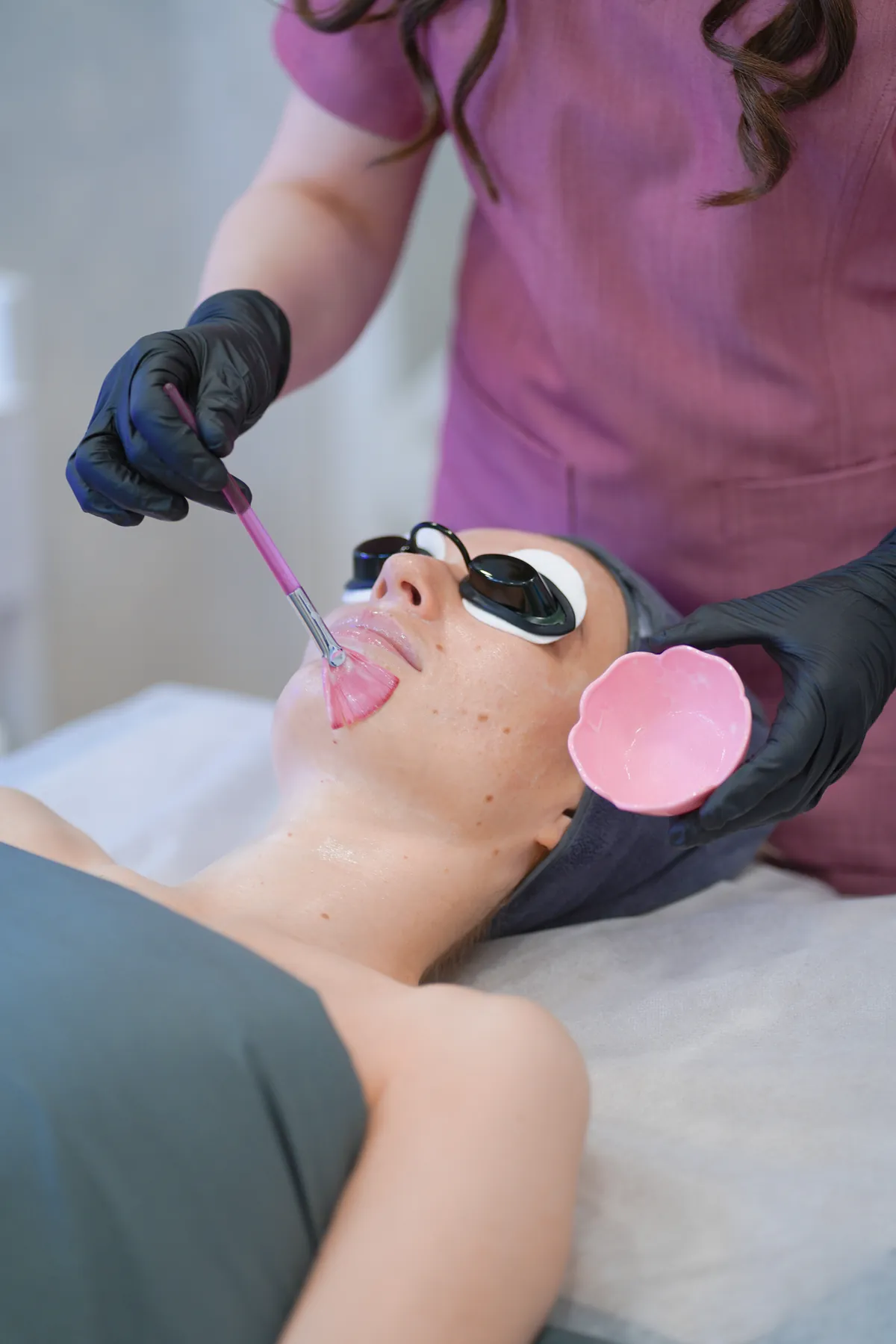
Your appointment begins with a discussion about your skin concerns, current skincare routine, recent treatments, sensitivities, medications, and treatment goals. Your esthetician will also assess the visible condition of your skin before selecting an appropriate peel.
Your skin is thoroughly cleansed to remove makeup, oil, sunscreen, and surface buildup. Additional preparation may be completed depending on the peel formulation selected.
The selected exfoliating solution is carefully applied and monitored throughout the treatment. Depending on the formula and your skin’s response, you may experience temporary tingling, warmth, or mild sensitivity.
The peel is removed, neutralized, or completed according to its professional protocol. Calming, hydrating, and barrier-supporting products may then be applied for comfort.
You will receive aftercare instructions based on the peel performed and your skin’s needs. Gentle skincare and daily broad-spectrum sunscreen are especially important while the skin is recovering.
The amount of visible exfoliation varies. Some clients experience little or no noticeable peeling, while others may notice temporary dryness, tightness, mild redness, or light flaking in the days following treatment. As the skin recovers, the complexion may begin to look smoother, brighter, and more refreshed.
The amount of peeling does not determine whether the treatment was effective. The goal is controlled exfoliation appropriate for your skin—not excessive irritation or dramatic shedding. Your expected recovery and aftercare will be discussed before treatment so you can plan around work, social events, and other commitments.
Retinoids, exfoliating acids, scrubs and certain acne products may need to be paused before and after the appointment. Follow the personalized instructions given by your esthetician rather than restarting active products too soon.
The most appropriate chemical peel depends on your skin’s current condition, sensitivity, concerns, and treatment goals.
Chemical exfoliation may help improve the appearance of excess oil, blackheads, clogged pores, and post-breakout marks. However, a chemical peel is not automatically appropriate for every breakout.
If the skin is actively inflamed, sensitized, overly dry, or experiencing barrier irritation, your esthetician may recommend a gentler clarifying or barrier-supporting facial first. The goal is to improve the appearance of congestion without creating unnecessary irritation.
Explore Our Acne Clarifying Facial →Uneven-looking tone and discoloration can develop after breakouts, sun exposure, irritation, or hormonal changes. A carefully selected superficial chemical peel may help improve the appearance of certain surface-level marks and patchiness over time.
Because overly aggressive exfoliation may worsen irritation or discoloration in susceptible skin, your skin tone, sensitivity, current products, and treatment history are considered before selecting a peel. Gradual treatment and consistent sun protection may be recommended instead of an aggressive approach.
Explore Our Glo2Facial for Brightening →When dead surface cells accumulate, the complexion may look rough, tired, or less radiant. Fine lines may also appear more noticeable when the skin is dehydrated or uneven.
A professional superficial peel may help refresh the skin’s outer surface and improve the appearance of brightness, smoothness, and refinement. Depending on your skin’s needs, your treatment plan may also include hydrating, oxygenating, or other customized facial services.
Explore Age-Supporting Facials →We never apply the same peel formula to every client. Your treatment is selected according to your skin’s current condition, sensitivity level, concerns, and goals at the time of your appointment.
Your chemical peel is performed by a licensed esthetician with a strong focus on professional skincare, client education, comfort, and responsible treatment selection.
When a chemical peel is not the best choice for your skin, we will explain why and recommend a facial treatment that better supports its current needs.
You will receive clear guidance on how to prepare, what to expect during recovery, and how to care for your skin after your chemical peel.
Treatments are provided in a calm, private Staten Island skincare studio where your appointment is focused entirely on your individual skin needs.
Clients visit SI Glam Glow from Staten Island, Brooklyn, other areas of New York City, and nearby New Jersey for customized chemical peels and attentive one-on-one care.
Everything to know before booking your customized chemical peel in Staten Island.
A chemical peel is a professional exfoliating treatment in which a carefully selected solution is applied to the skin to loosen accumulated surface cells. The purpose is to improve the appearance of concerns such as dullness, rough texture, clogged pores, superficial discoloration and fine lines.
At SI Glam Glow, we focus on customized cosmetic peels selected according to your skin type, sensitivity and goals.
SI Glam Glow offers customized chemical peel treatments at our private esthetics studio in Staten Island, New York. We serve local clients as well as visitors traveling from Brooklyn, other parts of New York City and nearby New Jersey.
An appointment is required so that enough time can be reserved to evaluate and treat your skin properly.
Yes. Many clients travel from Brooklyn to our Staten Island skincare studio for customized facial and chemical peel treatments.
Our location can be a convenient option for clients coming from areas of southern Brooklyn, including Bay Ridge, Dyker Heights, Bensonhurst, Gravesend and nearby communities. All services are performed at our Staten Island location.
No. SI Glam Glow’s studio is located in Staten Island. We welcome clients from Brooklyn, Manhattan and throughout New York City, but we do not claim to operate a separate Brooklyn or Manhattan office.
Depending on the formulation selected, a superficial chemical peel may help improve the appearance of dullness, rough texture, excess oil, clogged pores, post-acne marks, superficial uneven tone, visible pores and fine lines.
The treatment selected will depend on the cause and condition of the concern. Results vary, and some concerns require multiple treatments, consistent home care or evaluation by a medical professional.
The best peel depends on your skin type, sensitivity, current condition, previous treatments and goals. A formula appropriate for oily or congested skin may not be suitable for someone experiencing dryness, rosacea symptoms or barrier irritation.
Your skin will be assessed before a peel is recommended. In some cases, a gentler facial may be more appropriate.
Most superficial peels do not require anesthesia, but sensations vary. You may experience temporary tingling, warmth, tightness or mild stinging while the solution is on the skin.
The treatment is monitored throughout the appointment. Tell your esthetician immediately if the sensation becomes unusually intense or uncomfortable.
Possibly, but not always. Some clients experience light flaking or dryness, while others have very little visible peeling.
The amount of shedding depends on the formula, your skin condition and how your skin responds. A peel can still provide beneficial exfoliation even when there is no dramatic visible peeling.
Downtime depends on the type of peel performed and your individual response. With many superficial cosmetic peels, clients may experience temporary redness, dryness, tightness or mild flaking.
We will discuss the expected recovery before beginning your treatment. Avoid scheduling a new peel immediately before an important event unless your skin’s response to that treatment is already known.
Some clients notice a brighter or smoother-looking complexion after the initial recovery period. Concerns such as congestion, post-acne marks, uneven tone or texture may require a series of treatments and consistent home care.
Skin improvement is gradual, and results vary based on the concern being addressed, peel selection, sun exposure and skincare habits.
The appropriate interval depends on the peel, your skin’s recovery and your goals. Some superficial peels may be repeated as part of a planned skincare program, while others require more time between appointments.
Your esthetician will recommend a schedule only after evaluating how your skin responds. More frequent treatment is not always better.
Some sensitive skin may tolerate carefully selected superficial exfoliation, but a peel is not appropriate for every sensitive client.
Active irritation, an impaired skin barrier, rosacea flare, recent sunburn or reactions to skincare ingredients may require postponing the treatment. A calming or barrier-supporting facial may be recommended instead.
Certain superficial peels may help improve the appearance of oiliness, congestion, blackheads and discoloration left behind after blemishes.
However, active acne has different causes and severity levels. A peel is not a cure for acne, and inflamed or medically significant acne may require evaluation by a dermatologist.
Chemical peels may improve the appearance of superficial post-acne discoloration and mild surface irregularities, but they cannot promise to remove all acne scars.
Indented, raised or deeper scars may require medical treatments outside the scope of an esthetics studio. We will provide an honest recommendation based on what we observe.
Superficial chemical peels may help improve the appearance of some types of surface-level discoloration. The cause of pigmentation, skin tone, sensitivity and sun exposure must all be considered.
Because irritation can sometimes make discoloration appear worse, especially in pigmentation-prone skin, conservative treatment selection and daily sunscreen use are important.
Chemical peels may be performed on many skin tones, but product selection and treatment intensity must be approached carefully. Skin with a greater tendency toward post-inflammatory pigmentation can develop dark marks if it becomes overly irritated.
Your skin history and response to previous treatments will be considered before a peel is recommended.
Pregnancy and breastfeeding can affect which products and ingredients are appropriate. Tell us when booking and speak with your medical provider before receiving a peel.
We may modify the treatment, recommend a pregnancy-appropriate facial or postpone chemical exfoliation depending on the products involved and your provider’s guidance.
Retinoids can make the skin more sensitive to exfoliation. Products such as retinol, retinal, adapalene and prescription tretinoin may need to be stopped before treatment for a period recommended by your provider or esthetician.
Do not discontinue a prescribed medication without speaking to the prescribing medical professional.
Certain acne medications can significantly affect skin sensitivity, healing and treatment eligibility. You must disclose all topical and oral medications before your appointment.
Clients currently using or who have recently used isotretinoin or other prescription acne treatments should obtain guidance from their prescribing healthcare professional before scheduling a peel.
Chemical peels should not be performed immediately after injectable treatments. As a studio policy, we recommend allowing at least two to three weeks after Botox or dermal filler, unless your medical injector specifically provides different written guidance.
Tell us about all recent cosmetic procedures before your appointment.
It is best not to try a new chemical peel immediately before an important event. Even superficial peels can cause temporary dryness, redness or flaking.
Schedule well in advance so your skin has time to recover. When possible, complete a trial treatment beforehand to understand how your skin responds.
Depending on your skin and the peel selected, you may be asked to avoid retinoids, exfoliating acids, scrubs, facial waxing, tanning and prolonged sun exposure before your appointment.
Inform us about prescription products, recent procedures, active cold sores, allergies and changes in your skin. Specific instructions will be provided based on your treatment plan.
Avoid picking or pulling flaking skin, abrasive scrubs, unapproved active ingredients, facial waxing, intentional tanning and unnecessary sun exposure. You may also need to temporarily avoid strenuous exercise, saunas, steam rooms and very hot showers.
Use gentle skincare, moisturizer and broad-spectrum sunscreen as instructed.
This depends on the peel and your skin’s condition afterward. You may be asked to wait until the following day or until sensitivity has subsided.
Applying makeup too soon can irritate freshly exfoliated skin. Follow the instructions provided at your appointment.
We will not proceed simply because a chemical peel was originally booked. If your skin appears sunburned, inflamed, over-exfoliated, unusually reactive or otherwise compromised, we may modify or postpone the service.
A calming, hydrating or barrier-supporting facial may be recommended instead.
Use our online booking system to request your chemical peel appointment at SI Glam Glow’s Staten Island studio. Please provide accurate information about your skincare products, medications, allergies and recent treatments so we can prepare appropriately.
Customized Chemical Peel in Staten Island • Serving clients from Staten Island, Brooklyn, New York City, and nearby New Jersey